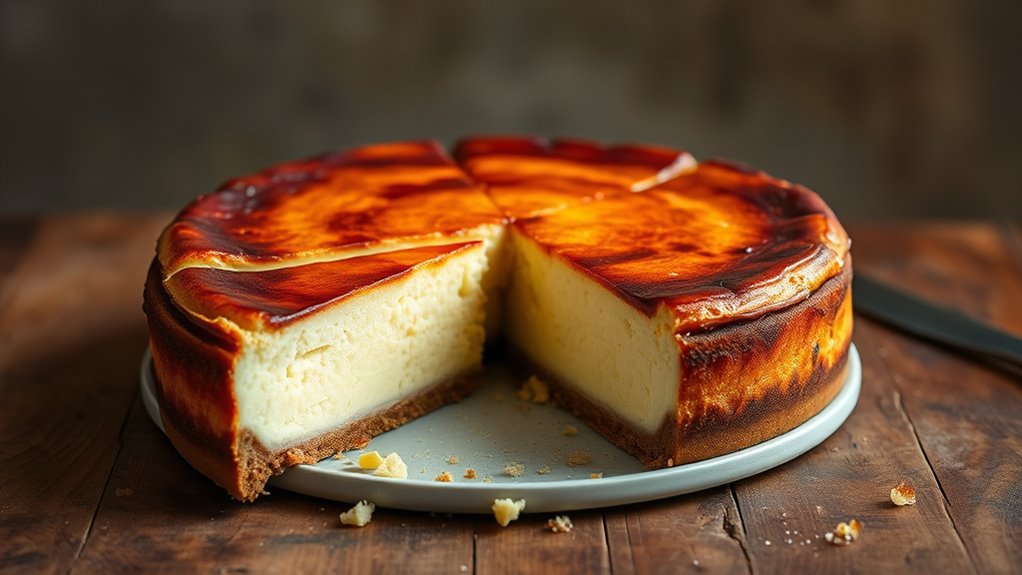
You’re about to experience the rich flavors and unique texture of burnt Basque cheesecake, a dessert that’s deeply rooted in the culinary traditions of San Sebastián, Spain. This sweet treat has a rich history, and once you’ve tried it, you’ll want to know more about its origins, key ingredients, and preparation steps. As you take your first bite, you’ll be excited to explore the endless possibilities of this dessert.
History
The origins of burnt Basque cheesecake can be traced back to the 1990s in San Sebastián, Spain. You’ll find that this region has a rich culinary history, and the cheesecake is no exception. The Basque origins of this dessert have had a significant cultural impact, with many restaurants and bakeries proudly serving their own version. As you explore the region, you’ll notice that each town has its own twist on the recipe, making it a unique experience. The burnt Basque cheesecake has become an integral part of the local culture, with its own festivals and competitions. You’ll soon discover that this sweet treat is a symbol of Basque hospitality and warmth.
Recipe
Burnt Basque Cheesecake is a unique and delicious dessert that has gained popularity in recent years. Unlike traditional cheesecakes, this dessert has a deliberate burnt exterior, which adds a caramelized flavor to the creamy cheesecake. The result is a rich, velvety cake that is both sweet and savory.
The beauty of this recipe lies in its simplicity. With only a few ingredients, you can produce a show-stopping dessert that will impress your friends and family. The key to success lies in the cooking technique, which involves baking the cheesecake at a high temperature to achieve the desired burnt exterior.
Ingredients:
- 2 pounds cream cheese, softened
- 1/2 cup granulated sugar
- 4 large eggs, separated
- 1/2 cup all-purpose flour
- 1/2 teaspoon kosher salt
- 1/4 cup heavy cream
- 1/4 cup whole milk
- 1/2 teaspoons vanilla extract
To begin, preheat your oven to 425°F (220°C). In a blender or food processor, blend the sugar, flour, and salt until well combined. Add the softened cream cheese and blend until smooth. Beat in the eggs, one at a time, followed by the milk and vanilla extract. Pour the mixture into a 10-inch springform pan and bake for 50-60 minutes, or until the edges are dark brown and the center is set.
Once the cheesecake has cooled, remove it from the pan and transfer it to a wire rack to cool completely. Once cooled, refrigerate the cheesecake for at least 4 hours or overnight. When ready to serve, slice the cheesecake into thick slices and serve. Be sure to let the cheesecake come to room temperature before serving, as this will help the flavors to meld together.
The Full Ingredient List
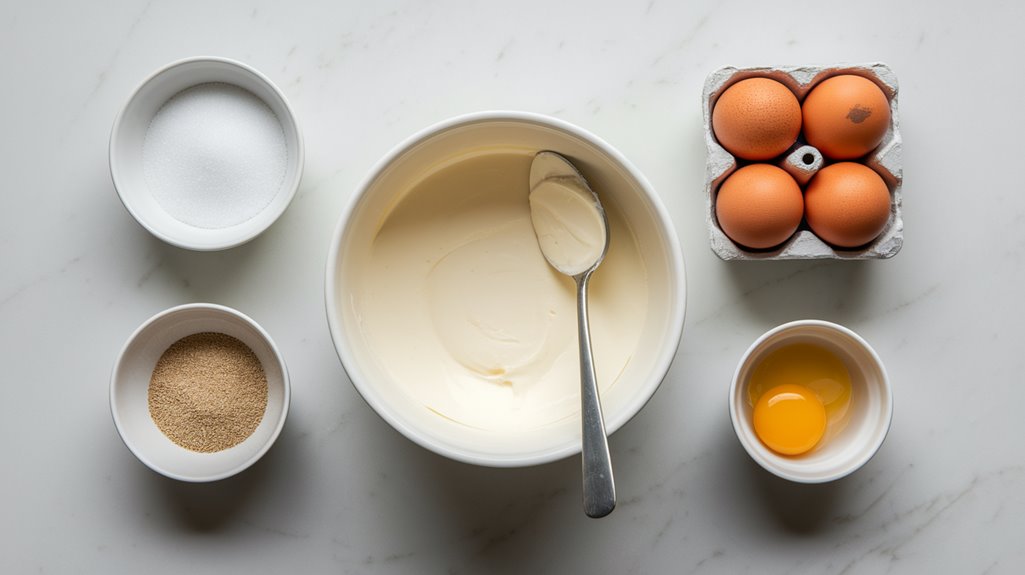
You’ve got all the necessary steps to make a stunning Burnt Basque Cheesecake, and now it’s time to focus on the ingredients that’ll make it happen.
Time to bring your Burnt Basque Cheesecake to life with the perfect ingredients!
Here’s what you’ll require:
- Cream Cheese: Look for low-fat alternatives for a healthier twist or vegan cream cheese for dietary adaptations.
- Heavy Cream: Substitute with almond milk or coconut cream for dairy-free options.
- Cane Sugar: Replace with coconut sugar or honey for a more natural sweetener.
Cooking Steps
You’re now ready to begin the cooking process. First, preheat your oven to 425°F, then mix the cream cheese until it’s soft. Next, add sugar to the mixture, followed by 4 large eggs and the scrap of a vanilla bean.
Step 1. Preheat Oven to 425°F
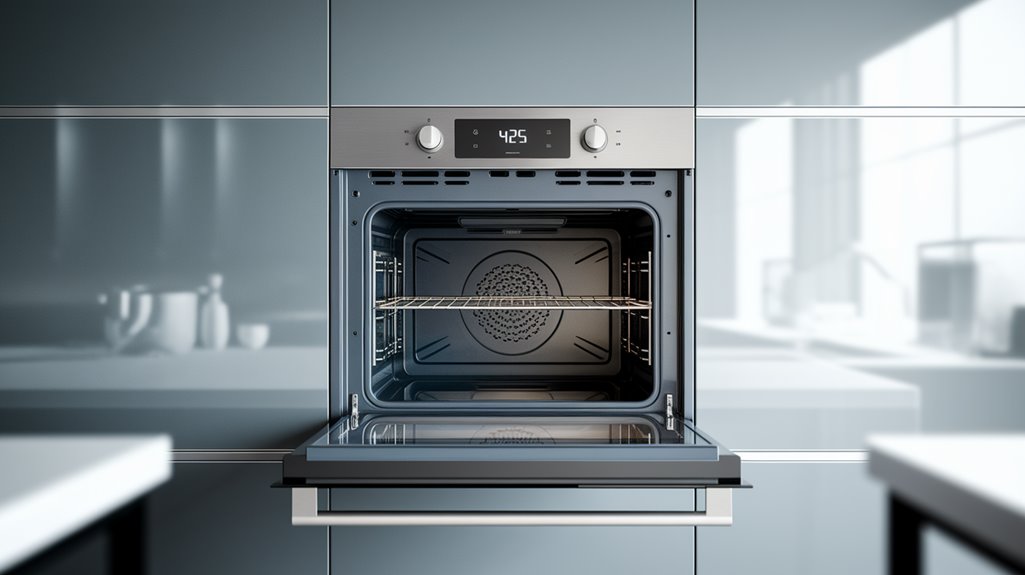
Get your oven scorching hot by preheating it to 425°F. This essential step guarantees Oven Efficiency, as it allows for even heat distribution and reduces the risk of undercooked or overcooked areas | hot spots.
| Safety Measures | Description | Oven Temperature |
|---|---|---|
| Check Oven Thermometer | Verify the temperature reading | 425°F |
| Guarantee Proper Ventilation | Prevent smoke buildup | 425°F |
| Keep Oven away from Flammable Materials | Prevent fires | 425°F |
| Monitor Oven Temperature | Adjust heat as needed | 425°F |
| Use Oven Mitts | Prevent burns | 425°F |
Mix Cream Cheese Soft
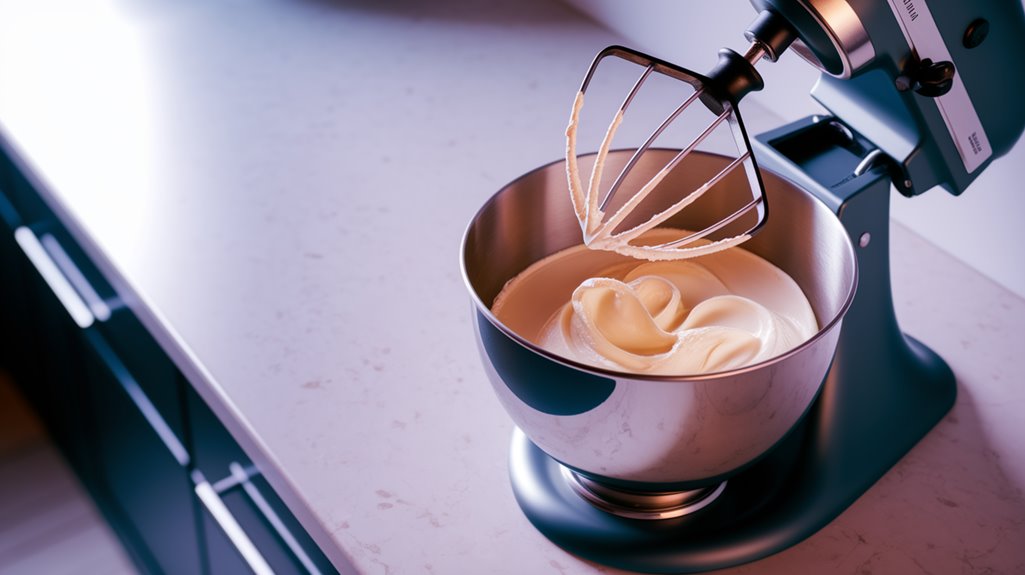
Mix cream cheese until it’s smooth and creamy, breaking down any lumps with a spatula or spoon. You can use various techniques to soften the cheese, like microwaving it for 10-15 seconds or leaving it at room temperature for about 30 minutes. Once softened, you can blend it using a stand mixer or a handheld electric mixer on low speed. Alternatively, you can blend it manually with a whisk or spatula. Make sure to scrape the sides and bottom of the bowl to guarantee everything is well incorporated. Continue blending until you get a smooth, which is essential for a creamy cheesecake.
Step 3. Add Sugar to Mixture
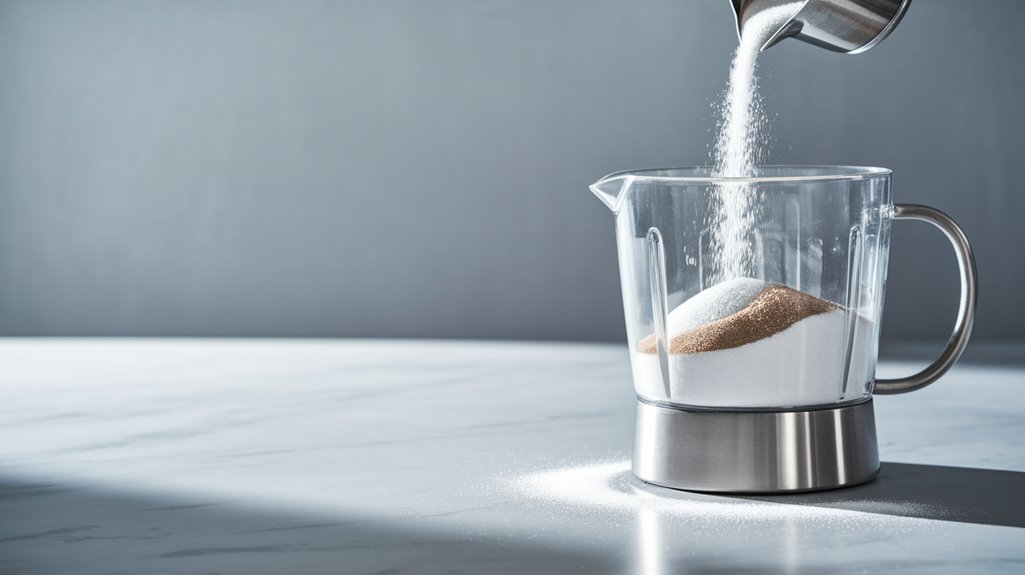
As you’ve successfully smoothed out the cheese, it’s time to introduce the sweetness. Add 1 1/2 cups to the mixture, taking into account your desired sweetness levels. If you’re catering to specific dietary concerns, consider using alternative sweeteners like stevia or maple syrup. However, keep in mind that these alternatives may affect the cheesecake’s texture. When adding sugar, use a gentle folding motion to avoid developing the mixture’s gluten. This guarantees a smooth, creamy texture in your burnt Basque cheesecake. With the sugar incorporated, you’re one step closer to creating a rich, velvety cheesecake that’s sure to impress.
Step 4. Add 4 Large Eggs
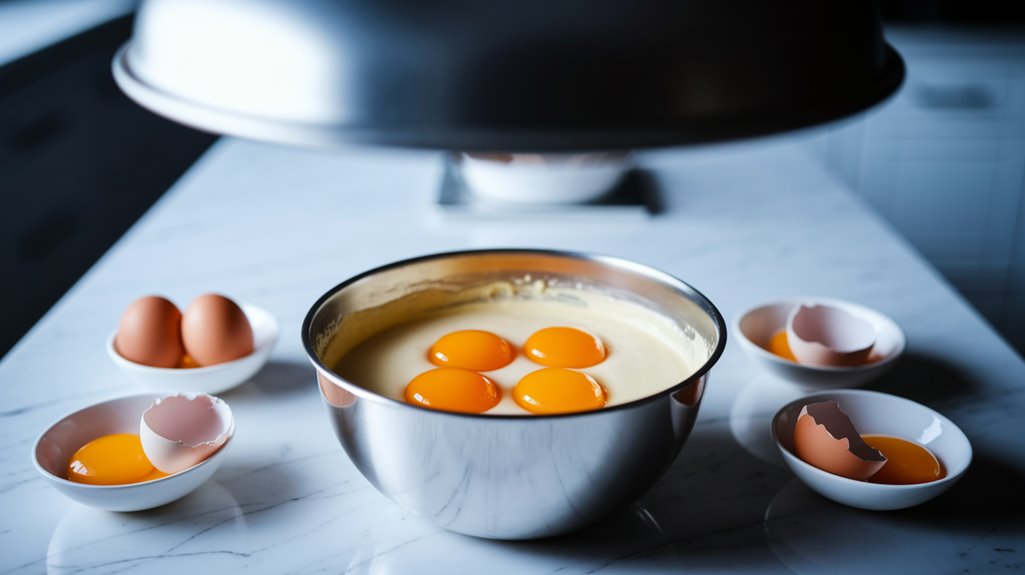
Crack open 4 large eggs, beating them lightly to break down the yolks and whites. Make sure to handle them gently to avoid incorporating air, which can lead to a lighter, less dense cheesecake. If you’re concerned about using eggs or need an alternative, you can substitute with flax or chia eggs. However, keep in mind that these alternatives might affect the texture of your Basque cheesecake. Before adding the eggs, perform a quick freshness test: gently place the egg in a bowl of cold water. If it sinks, it’s fresh and ready to use. Now, add the eggs to your mixture, stirring until fully incorporated.
Step 5. Add Vanilla Bean Scrap
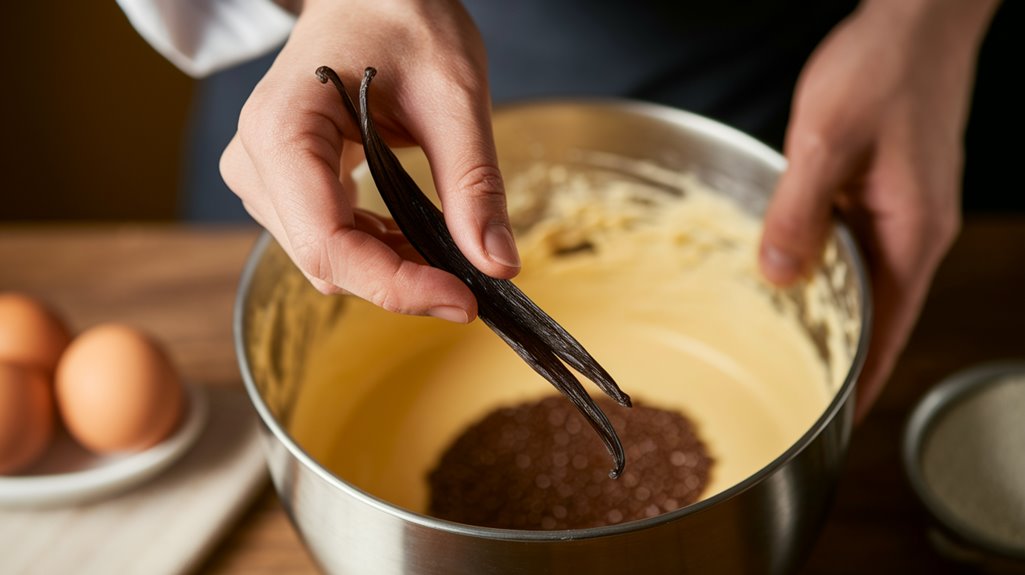
Add a pinch of sweetness by scraping the seeds from a single vanilla bean. You’ll unleash the aromatic potential of this expensive spice, making it a sustainable use of this pricey ingredient. As you scrape, the seeds release their essence, filling the air with a calming aroma, perfect for aromatherapy. Now, add the scraped seeds to the mix, blending until well combined. The subtle sweetness will balance the richness of the cheesecake, creating a delightful flavor experience. With this addition, you’re one step closer to creating a burnt Basque cheesecake that’s sure to impress.
Final Thoughts
With your newfound skills in making burnt Basque cheesecake, you’re likely wondering what’s next. Now that you’ve mastered this unique dessert, it’s time to form your Personal Verdict. Be honest – do you love the charred, caramelized crust and the creamy interior, or is it just a novelty for you?
Whatever your verdict, you can’t deny the possibilities for Future Variations. You could experiment with new flavors, like matcha or pistachio, or try using different types of cheese for unique flavor profiles. The burnt Basque cheesecake has opened doors to endless possibilities, and it’s up to you to explore them. So go ahead, get creative, and see where your newfound skills take you!